
Childhood encounter with ‘hero’ PC inspired future sergeant
Main article content
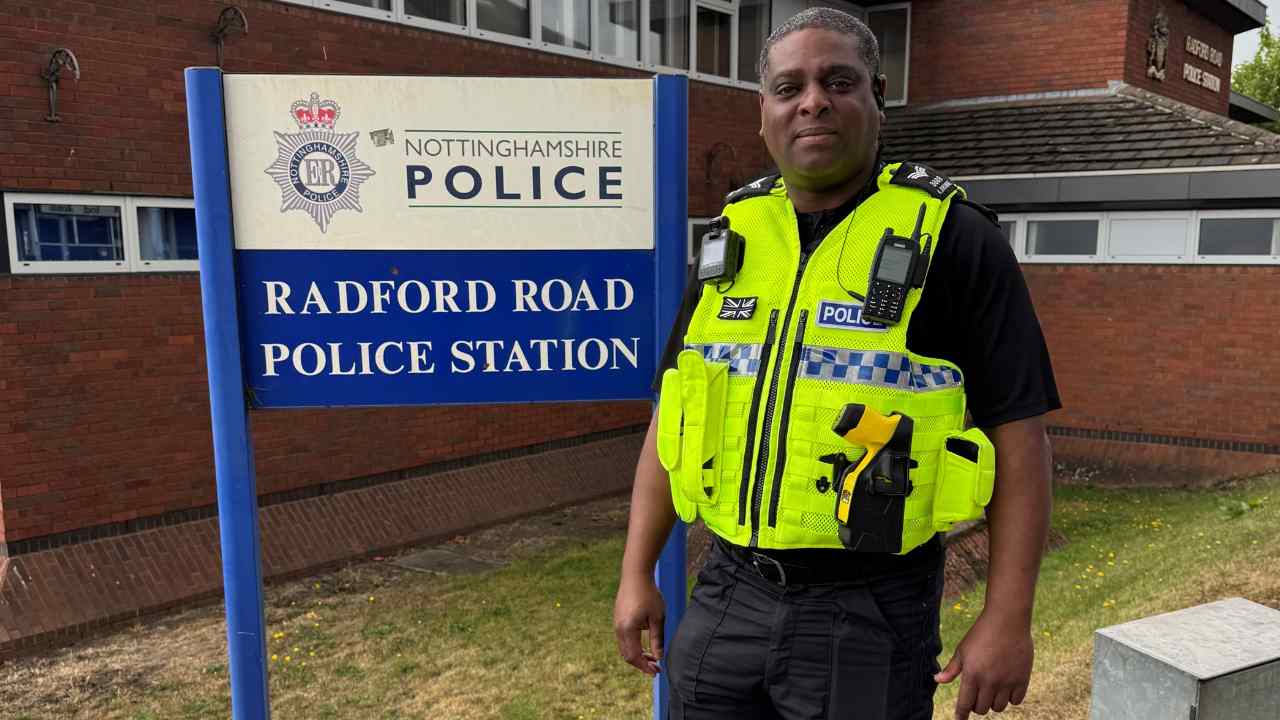
Sergeant Karl Browne is living proof of the impact an early positive interaction with the police can have.
The officer is now a quarter of a century into his policing career after being inspired by an encounter as a young boy.
Aged just 11, he and his brother were threatened and robbed by a group of older kids on the outskirts of Birmingham.
At that point, a policeman came to the aid of the shaken-up duo, before taking them home and telling their mum what happened.
It’s fair to say the positive interaction with the white officer left a lasting impression on Sgt Browne and set him on the path he’s on today.
“I feel very lucky because not a lot of people know what they want to do, but I knew aged 11 that I wanted to be a police officer,” he said.
“We were both really scared by what happened, but the way that officer acted made a real difference to us and he was a hero in our eyes.
“Because of that, the police were always a positive to me, whereas somebody else might have had a negative experience at that age.
“That is so important because you form those perceptions when you’re young, so if you’re showing yourself in a positive light, it can have a real impact.
“There have been occasions where I’ve faced racism in my life, but growing up in a very white area just outside Birmingham, it was never there for me.”
Despite himself being immediately sold on the idea of joining the police, his family needed a bit more convincing.
That was based on their own less positive experiences with the police – a common issue the national Police Race Action Plan is trying to address.
All forces have signed up to the Race Action Plan, which aims to tackle racial disparities and improve confidence in the police among Black communities.
Another key part of it is to help Black people feel represented and see themselves in their local police force.
While he insisted policing has “evolved” over the years, Sgt Browne admitted it was understandable that a lack of trust remained.
He said:
“My father was really against it when I joined the police, which was understandable really, with him being part of the Windrush Generation.
“The racism he and my other family members had back in those days was horrific.
“They were regularly met with racism from the police, even to the point where they would have to be in by a certain time or face trouble.
“You can understand then why my father was against me joining, but the day I had my passing out parade, he told me how proud of me he was, which was one of my proudest moments in life.
“That older generation really had it tough, but I do think as a society we’re evolving and as a police force, we’ve evolved.”
Sgt Browne added:
“We’ve recognised that, as a force, we probably haven’t got it right in the past, so we’re trying to rectify that now.
“In terms of recruiting more Black officers, visibility is important, so the community needs to see more people of colour in frontline policing positions.
“I can’t speak for everybody because everybody’s got different experiences, but I’ve never had an issue in the police and always felt like I could thrive.
"My message to any young person of colour who's thinking of joining but is maybe a bit hesitant about doing so would be to just go for it.
"It's a brilliant job, while I'd say as well that we've got lots of people in the organisation who can support you, including the Black Police Association and other groups like that.
"Some people might have a perception about the police, but if they sit down in front of someone who's been there and done it, that perception could change.
"There's a network of support that you can turn to, and I'd include myself in that. If anyone wants to have a chat with me, I'm more than happy to do that."
Before joining Nottinghamshire Police 12 years ago, Sgt Browne had stints at The Met – where he policed the Olympics – and his native West Midlands.
Now a neighbourhood sergeant covering the Arboretum area, the experienced officer elected to share his story as part of Black History Month.
Nottinghamshire Police has been providing mandatory Black history training for all its officers and staff all-year round for about two years now.
For Sgt Browne, education – whether it be through initiatives like that or Black History Month in general – is key to making further positive change.
He said:
“Black History Month is a great chance to celebrate some of the great stuff people of colour have done over the years, so I’m a big fan of it, personally.
“In terms of the Black history training, I completed it myself recently and found it really empowering, while it was great to see it on the syllabus and people new to the force completing it.
“I just think education and engagement is so important, especially with young people while they’re forming their values and perceptions.
“My story is the perfect example of that, really.”