Close announcement bar
Alert
Notice
We’re aware of an issue affecting the address finder on some forms. This is linked to a problem with an external service, which may mean you’re unable to complete your report or application at the moment. We’re monitoring the situation closely and will provide updates as soon as possible. Please try again later. We apologise for any inconvenience.

Record-breaking year for knife crime team as more than 200 weapons seized
Main article content

More than 200 knives and other dangerous weapons have been taken off the streets and out of harm’s way during a record-breaking year for a specialist police team.
The force’s knife crime team seized a total of 224 weapons and made 150 arrests during 2025 as its dedicated officers continued their work to keep communities safe.
The team also made 187 drug seizures and carried out 519 stop and searches on the streets of Nottingham and surrounding areas.
The team has now been directly responsible for more than 1,000 knives and offensive weapons being seized since its formation in 2016.
Both the weapon and drug seizure figures are record results for the team and have been achieved thanks to targeted patrols and use of the latest intelligence to identify suspects who could be carrying a weapon or be involved in other criminality.
The approach has resulted in numerous blades being found that might have otherwise gone undetected.
Being out on the streets has also led to the team identifying other offending, including drug dealing and traffic offences, although targeting knife crime remains their number one priority.
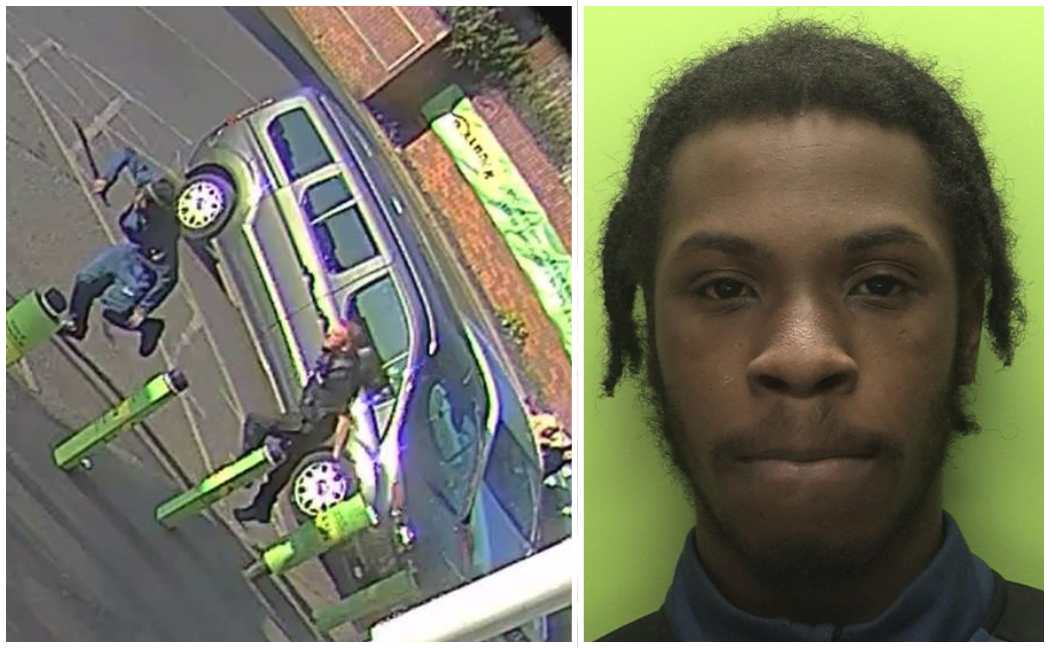
Jordan Bazuna was jailed after producing a machete while being chased by knife crime team officers
The latest data from the Office for National Statistics shows a one per cent reduction in knife-enabled offending and a 5.4 per cent fall in violent knife crime in Nottinghamshire between October 2024 and September 2025, when compared to the same period the previous year.
Chief Inspector Kylie Davies, the force’s knife crime lead, said:
“These are fantastic results for the team and a testament to both their hard work and the smart thinking methods they utilise to identify knife carriers and keep our streets safer.
“Reducing knife crime is a force priority and the team’s proactive uniformed and plain clothes patrols, stop and searches and weapons seizures are a vital element of these focused and robust efforts.
“Their work allows us to stay one step ahead of those wiling to put themselves and others at risk by carrying a knife.
“Having this visible presence on the streets can have a real impact in helping to deter this type of criminality, while allowing us to rapidly respond to any offences that take place.
“I’d like to commend Sergeant Matt Daley and his team for their dedication and determination to reduce the number of knives in circulation, which is reflected in these outstanding results.
“We have repeatedly said that education and prevention are also key to reducing knife crime.
“Alongside our partners, we do a lot of focused work around early intervention to try and stop young people making the decision to carry a knife.
“However, we have been very clear that we will not tolerate those who put themselves and others at risk by carrying these weapons.
“If you carry a knife then you can expect to be seen, stopped, searched and arrested.”
Among the key arrests were:
- Knife carrier Jordan Bazuna who produced a machete during a foot chase with knife crime team officers through a supermarket car park. He went on to be locked up for four years in December.
- Offenders Mohammed Moussa and Laquarne Fogo were spotted behaving suspiciously inside a taxi in Nottingham city centre. Knife crime team officers pulled the vehicle over and both offenders were found to be carrying a knife. Each received a custodial sentence.