
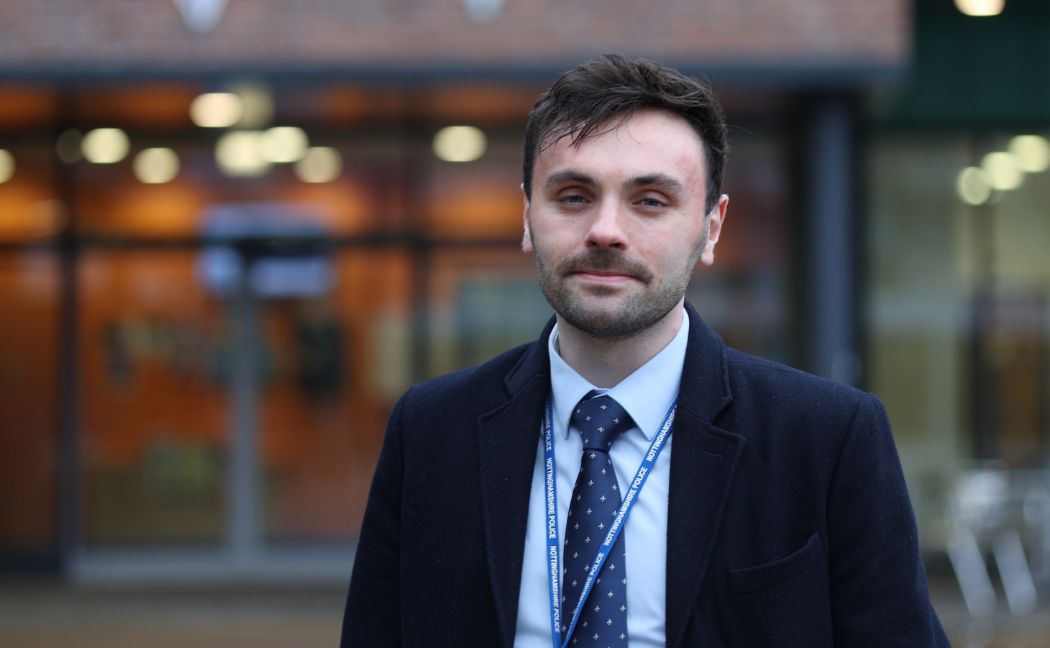
Meet DC David Williams
What motivated you to become a detective?
I have always wanted to be a detective, aside from wanting to be a cowboy between the ages of two and five. This motivation comes from a single-minded and dogged determination to throw myself into an investigation and be in a career that is interesting and intellectually stimulating.
Being a detective is a nice mix of being pro-active and operational as I get to be out at arrest attempts with my harness on, before going back to the station to use complex software and systems to investigate and discover new pieces of evidence in serious crimes.
The role of a detective really gives me the freedom and the opportunity to use every problem-solving skill to fully investigate crimes and challenge myself to reach my fullest potential. Of course, it would have been much easier to just say that I’ve watched too many true crime documentaries!
Why did you choose the detective pathway?
Traditionally, becoming a detective was only achievable after completing two years of response policing. Previously, I’d always struggled with self-confidence and anxiety, and I wasn’t sure that I would have the strength and resilience to spend those years on response just to get into the job that I had always dreamed of doing.
The introduction of the detective pathway through the police constable entry programme offered a golden opportunity for me as it meant that I only needed to spend six months gaining vital experience doing frontline response policing whilst also going through my PIP Level 1 portfolio although ironically, it turned out to be something that I really enjoyed.
This pathway has helped me to build my confidence and investigative tools, and I’ve been able to move through different departments to gain even more experience.
What has been your favourite thing about the programme so far?
It’s a tough call as I’ve thoroughly enjoyed every attachment I have been on so far. However, my current posting on the burglary and robbery team would have to be my favourite thing about the programme so far (and I’m not just saying that because they may read this).
Response was fantastic as it’s fast-paced and varied and the people you work with become friends for life however, the burglary and robbery team is the perfect introduction into the criminal investigation department (CID). The pressure feels more manageable and there is a similar amount of freedom when compared to response.
You go out with nothing but a pair of handcuffs and a radio (slight exaggeration) to do your own enquiries and investigate your own leads, and the nature of the department means that you are able to see the investigation from the initial report, right through to when it goes to court.
What are you most looking forward to when you finish your training?
Without a shadow of a doubt, I am most looking forward to officially qualifying as a detective constable. Passing the national investigators exam is a major milestone in my prospective career with Nottinghamshire Police and the main objective I set myself to achieve since starting.
I remember feeling such pride and a real sense of achievement when I was officially attested as a police constable, and I have a similar level of excitement and reverence for hopefully passing what is generally regarded as a very difficult exam to officially become a detective constable like my father once did.
What advice would you give to someone considering a career as a detective?
If you’re considering a career as a detective, I would say to always hold your initial reasons for wanting to become a detective close to you. You will have many long shifts and be off late more often than not, but it is important to maintain that drive for pursuing this career in the first place.
Don’t get put off by having to complete an attachment with response as you will learn a huge amount in a short space of time, and those experiences will shape you into a more effective investigator later on. My general and maybe more practical advice would be to eat whenever you get the opportunity and to get as much sleep as you can.